Sunday, 1 April 2018
Sunday, 28 January 2018
Diagnosis of polycystic ovary is not an easy task.
The doctors are baffled about the exact diagnosis of
PCOS because the diagnostic criteria of PCOS changes with age!!!
The
diagnosis of polycystic ovarian syndrome particular in the teenager and young adult
group primarily rests on the following clinical, lab. and sonographic tests like
i) Clinical (visible) or lab. evidence of HA=Hyper Androgenism, ii) Clinical
history of Oligo An=Oligomenorrhoea (infrequent menstrual periods)/Amenorrhoea
(cessation of menstrual period more than six months), and iii) Ultra-sonography
evidence of PCOM=Polycystic Ovarian Morphology, i.e. large cystic ovaries. But,
the clinical problem is that the prevalence of these three different above
mentioned diagnostic criteria of PCOS changes with age. The clinical
presentation of Oligo-An varies by age, because amenorrhea and oligomenorrhea
being common among adolescents, while menstrual cycles may become regular with increasing
age in women with PCOS. HA (Excess Androgen i.e. excess male hormone features) partially
resolves before menopause in women with PCOS. It’s known to us that ovarian
volume and follicle number decrease with age in women both with and without
PCOS. It’s also known that in most cases aging may be associated with a defect
in insulin action. Therefore, the clinical features and metabolic consequences
of PCOS may vary with age, and these age-related changes may affect the
observed incidence of PCOS in almost all countries. Therefore there we doctors
or any caregiver should remember about these age related change in the
menstrual cycle and clinical expression of androgen levels including absence of
sonological features of cystic appearance of ovaries.
How many of us are aware thet degree of hyperandrogenism
change with advancingage age incases of
PCOS??
We know
that elevated serum concentrations of androgens are the most consistent
biochemical abnormality and is often considered as the hallmark of the PCOS syndrome .This
conclusion is arrived after the fact that there is an age-related decrease in
androgen secretion, as in normal women, such also occurs in women with PCOS. Many studies have
observed that hyperandrogenic women exhibit a negative association between
DHEAS levels and age. It has also been observed time and again that all the three common serum androgen markers namely, total testosterone,
androstenedione, and DHEAS were
significantly negatively correlated with age. Additionally, it have been also
observed that the incidence of acne and hirsutism decreased with advanced
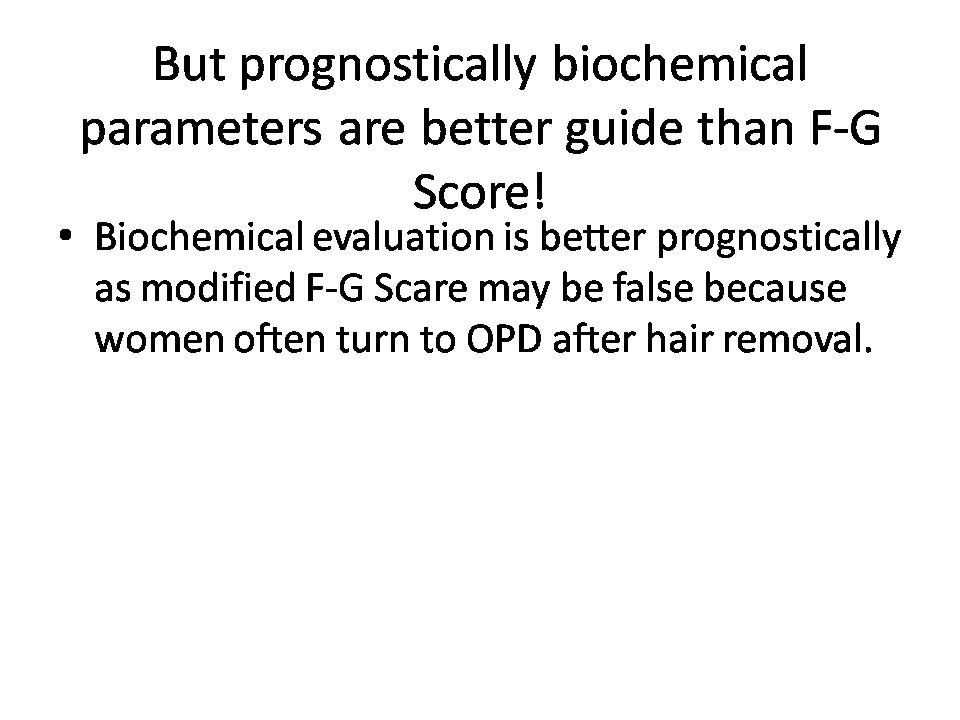
age, as is mF-G score, and serum DHEAS
levels.
What are the common four phenotypes of PCOS? This is important
at least for treatment purpose because till date the treatment of PCOS is
mostly empirical and symptom-based As such scientist and reproductive
biologists have classified PCOS into four broad phenotypes, though there are
many other phenotypes of PCOS. Total 43 phenotypes have been classified by some
International Organizations and also by “Androgen Excess and PCO society”.
However for day to day clinical practice the following classification seems to
be more meaningful.
What are the common four phenotypes of PCOS? This is important
at least for treatment purpose because till date the treatment of PCOS is
mostly empirical and symptom-based As such scientist and reproductive
biologists have classified PCOS into four broad phenotypes, though there are
many other phenotypes of PCOS. Total 43 phenotypes have been classified by some
International Organizations and also by “Androgen Excess and PCO society”.
However for day to day clinical practice the following classification seems to
be more meaningful.
a) Phenotype-I PCOS -> Characteristic will be i)
Oligomenorrhea/sometimes Secondary Amenorrhea; ii) USG will show evidence of
PCOS or PCOM, iii) evidence of hyperandrogenism, iv) Hyperinsulinaemia woman /
Normo-insulinoma woman. In 37.5% of such type-I cases there will be clinical
and laboratory metabolic syndrome. In fact this is the commonest phenotypes of
PCOS as high as 65.6% of PCOS women. If there is documented hyperinsulinaemia
then the doctor should seriously consider the Insulin sensitizer has the first
or initial drug of choice like i) Metformin, ii) Myoinositol & other
isomers, iii) Chr. Pico ate, iv) NAC, v) Vit-D à preferred initial
agent will be drugs to combat IR not the Ovulogen).
b) Phenotype-II: This comprises i) Oligomenorrhea, ii) USG evidence polycystic ovary or PCOM,
iii) usually Normo-androgenic women and
10% will have associated metabolic syndrome (they will need judicious administration
of lipid lowering agents) – If at all hyperandrogenaemia then it’ll be better
to treat them by OCP as an initial drug. If they seek fertility treatment then
it will be prudent to prescribe Pre Tr. with Inj Agonist in previous mid luteal
phase or pre tr. with Progesterone, Inj. Progesterone for consecutive five days
followed by gonadotrophin Inj. and IUI. All these information’s are mentioned
so that many of us don’t unnecessarily carry on with Clomiphene or Letrozole
for months together which will be futile induction. Therefore before we
prescribe CC or Letrozole it will be again good clinical gesture if some
phenotypic classification is made well ahead and a planning a type of induction
is rationally designed. These type-II cases are most likely to be CC resistance
due to high insulin level. However the prevalence of type-II PCOS in India is
about 22.2%.
c) Phenotype-III PCOS: Usually there is i) no Oligomenorrhea (Eumneirrhoic)
or very rarely there can be oligomenorrhoea, ii) USG evidence of PCOS, iii)
Moderate hyperandrogenism, iv) Minimal number of such PCOS women will have
metabolic syndrome. The prevalence of phenotype-III will be only about 1% of
PCOS women. –If history is Oligomenorrheaà Primary agent of Ry will be CC/Anastrazole/
Gonadotrophins in cases who are oligomenorrheic.
d) Phenotype-IV: i) Oligomenorrhea+, b) Ovaries in USG usually
normal pattern with normal echogenicity and volume, iii) hyperandrogenism+, iv)
metabolic syndrome will be associated in 50% of phenotype-IV PCOS. In fact the
prevalence of these phenotypes is 11.2% of all PCOS.
Tips-1: PCOS women seeking fertility restoration – tips for drug
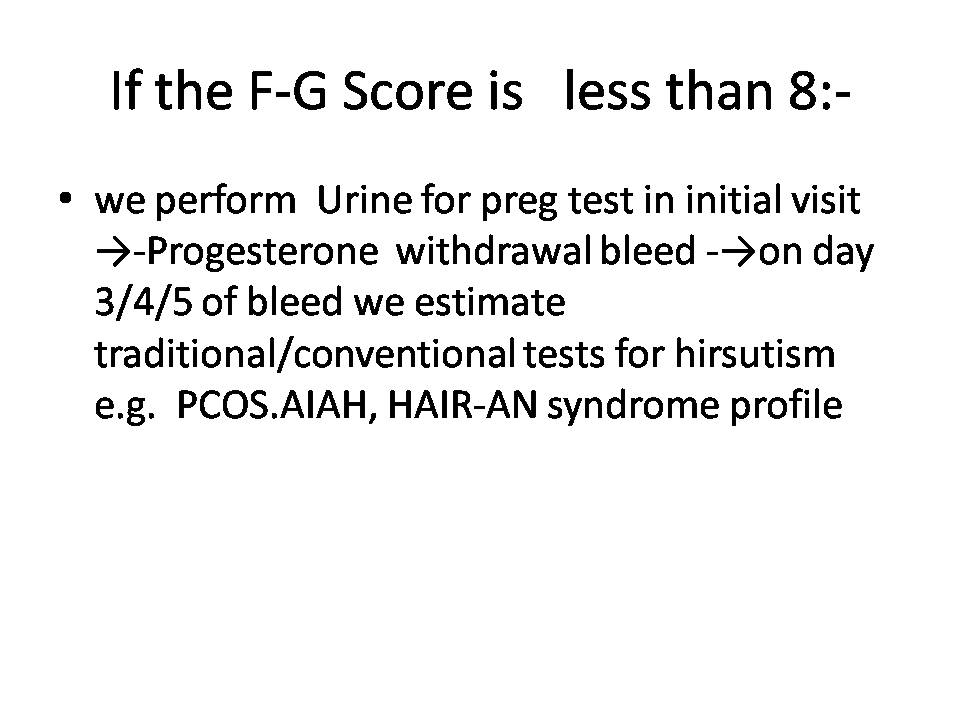
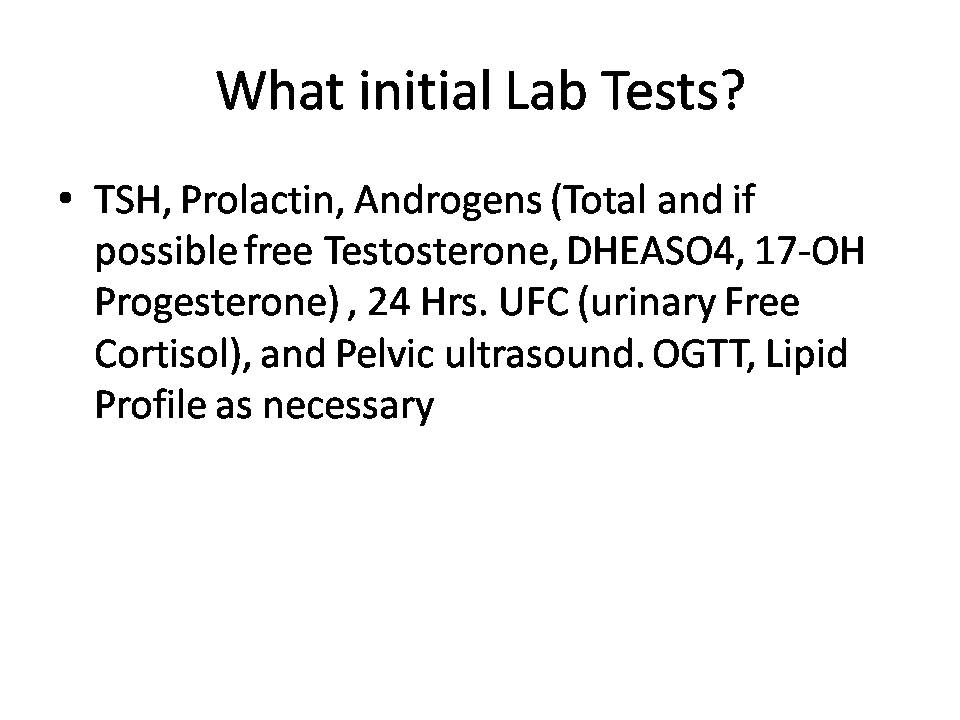
selection seeking women. At first one has to assess TSH, Purl. DHESO4. Now
after estimating all these three hormones we have to supplement or suppress the
hormone milieu. Suppose in there is isolated rise of prolactin hormone,
dopamine agonist (cabergoline or bromocripitine) will suffice. But, who demonstrate
unusual raise of DHEASO4 and/or T4 then my dear members it will be prudent to
find out source of Testosterone by special tests like ACTH stimulation tests,
Serum cortisol etc, 17-OH P etc.
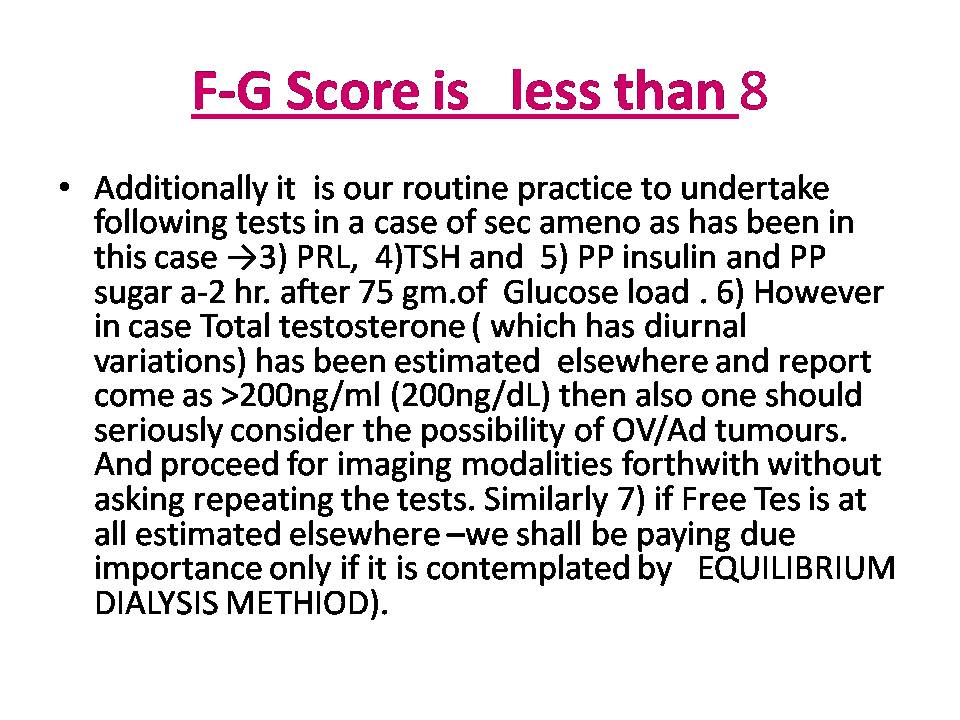
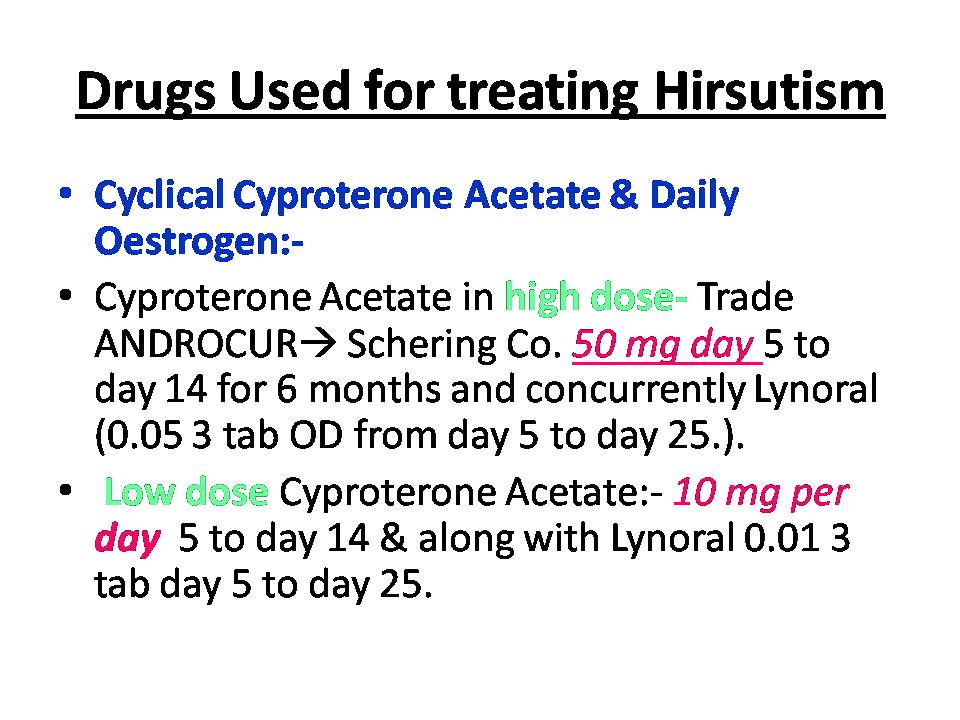
Tips-2: If there is abnormal hair growth then she should ideally
refer to an Endocrinologist and Cosmetic Surgeon if necessary. In these cases
COC alone or in combination with Aldactone will hopefully suffice.
Tips-3: To note that most Obese PCOS, even average weight PCOS
women will mandate Lifestyle modification, Exercise, Dietary Modification,
Vit-D supplementation if serum level is low, Anti-oxidant to prevent onward
vascular damage and only on few occasion some PCOS women will have to take Orlistat
(if obesity but overweight women) and lipid lowering agents particularly if
triglyceride levels are high.
Tips-4: For instance if LH is high and Ovarian Volume is > 12
CC3à then LOD (laparoscopic
Drilling of ovaries) may be given priority to maximize the efficacy of Tr of
ovulation induction..
By contras if there is predominate hyperinsulinaemia in a
clinically suspected PCOS then one should can allow fair trial with insulin sensitizers
for couple of months without resorting Clomiphene /Anastrazole or gonadotrophin
inj-not to speak of ART.
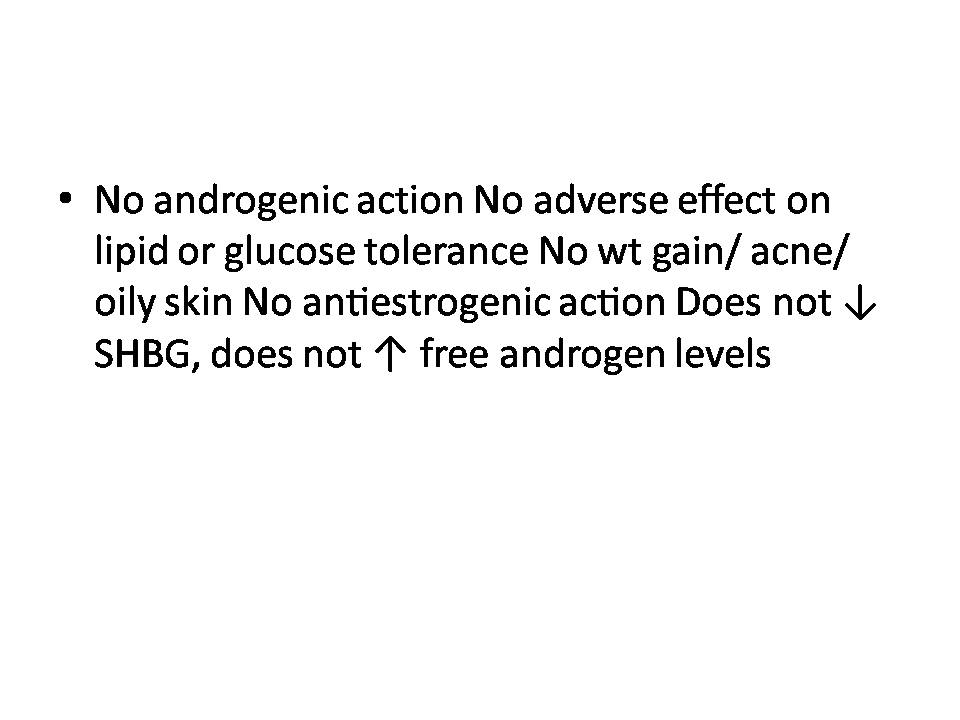
The beauty of insulin sensitizers is those such drugs but not
all insulin sensitizers in addition to controlling plasma glucose but also reduce
circulating serum androgens. We should
keep in mind that Letrozole reduces or should I say normalizes the ovarian bio synthesis
of androgens—in the cortical tissue of ovaries).
AMH is an important marker for female fertility potential. If AMH (A hormone secreted by ovaries) is too low then she is medically called is DOR or POF.
Where is the source of AMH? We want to learn more about AMH. Anti-Müllerian Hormone (AMH) has long been known to provide insight into ovarian function. It is produced by small, growing follicles, thus providing us with quantitative information on ovarian reserve ,The study findings support the hypothesis that AMH levels are biomarker of oocyte and embryo reproductive health besides predicting number of oocyte obtained by COH (Capability of Ovaries to produce eggs by whipping the ovaries by strong high dose hormones called gonadotophins mainly FSH).
In the 21st
century most of us have heard the name of Donor Egg e.g. third party
reproduction (by using egg of some other women) is also called egg sharing.
This is a variety of artificial reproduction (ART procedure). The egg of other
women is only considered when a particular women is unable to produce her own
egg due absence of her total no. of eggs which God gave her at the time of
birth. The cause of early and speedy loss of all eggs by the age of 35 yrs or
say 40 yrs is not known to us with certainty.
When to then
consider donor egg if she (POF case) is desirous of a baby to be carried and
nourished in her own womb? It’s true that not all women will be considered for
donor egg. Some criteria have been framed by different recognized International
fertility societies. I’m mentioning one of such criteria where we doctors
should seriously counsel about donor egg-to be fertilized with the husband’s
sperm and then the young baby so formed inside the test tube is to be transferred
(ET-Egg transfer by a special tube) in the recipient (Womb) either in the same
cycle or else this newly formed baby (Embryo) may be preserved in the cryocan
to be thawed and then put to womb of the desired candidate in a subsequent
month after preparing the bed (Endometrium) inside the womb so that the young
embryo can get good nutrition once transferred to the prepared womb which is
relatively thin and has become small due to stoppage of own female hormones. This
entire process is called endometrial preparation- by giving her good amount of
estrogens from outside which she can’t produce of her own.
Then when we
the doctors should allow a women for receiving a donor egg? Of the four
criteria/parameters mentioned below at least two of the following criteria should
be present.
1) AMH between O.5 and 1
2) Antral follicle count (follicle between 2-5 mm) less than 4
AF
3) Maternal age more than 40 years.
4) FSH 3rd day more than
20 IU. & 5) THOSE WOMENPoor
responders fit for egg donation.
Then to summaries the whole issue
of counseling about donor egg: What are the criteria of DOR & Egg Donation
Programme?
Two of the following criteria must be positive to qualify to receive donor egg.
AMH
between .5 and 1
Antral
follicle count (follicle between 2-5 mm) less than 4 AF
Maternal
age more than 40
FSH 3rd
day more than 20 IU
Poor responders fit for egg donation
Nomo-responders
--- FSH 15 -20
Antral
Follicle count 5-7
AMH 2-4 (above 5.8 AMH in PCOS)
We all know about AMH in females. How many members are aware of AMH in males? Please try answering. Thanks.
The Sertoli cells secrete a glycoprotein known as anti miillerian hormone (AMH), which causes regression of the paramesonephric duct system in the male embryo and is the likely signal for differentiation of Leydig cells from the surrounding mesenchyme . The Leydig cells produce testosterone nd with the converting enzyme 5a –reductase, dihydrotestosterone. Testosterone is responsible for evolution of the mesonephric duct system into the vas deferens, epididymis, ejaculatory ducts and seminal vesicle. At puberty testosterone leads to spermatogenesis and changes in primary and secondary sex characteristics. Dihydrotestosterone triggers the development of the male external genitalia and the prostate and bullbourethral glands. In the absence of testis determining factor the medulla regresses and the cortical sex cords break up into isolated cell clusters (the primordial follicles ).
The germ cells differentiate into oogonia and enter the first meiotic division as primary oocytes at which point development is arrested until puberty . In the absence of AMH the mesonephric duct system degenerates although in at least one fourth of adult women, remnants may be found in the mesovarium or along the lateral wall of the uterus or vagina .
Egg Donation : When & to whom?? Egg donation has been used to treat human infertility for over 3 decades, and remains an integral part of ART setups. The technique is rapidly gaining popularity in developing countries including India. Specific causes amenable to oocyte donation include surgical oophorectomy, irreversible gonadal damage after chemotherapy/radiotherapy, turner syndrome and other chromosomal aberrations causing gonadal dysgenesis.
What is the main cause of early ovarian failure (POF-DOR)?? The etiology of POF is many:--The common causes are mentioned below:- 1) chromosomal, 2) autoimmune, 3) iatrogenic, 4) infectious, and other many CAUSES where science cant progress.,These are medical terminology called in Idiopathic( NOT UNDERSTADABLE in spite of many many costly tests)..
Then where we doctors should seriously consider DONOR PROGRAAME? To all women? Certainly not to all DOR.
The specific causes deemed suitable for oocyte donation include surgical oophorectomy, irreversible gonadal damage after chemotherapy/radiotherapy, Turner syndrome and other chromosomal aberrations causing gonadal dysgenesis. In addition, oocyte donation may be preventing the transmission of a genetic disease in cases in which the carrier status of both partners is known. Overall, this technique provides women with POF or a diminished ovarian reserve (DOR), with a very realistic chance of pregnancy._
Repeated in Vitro Fertilization Failure and/or fertilization is there in the test tube but when such fertilized egg is place in the womb it doesn’t grow (implantation failure). These are not uncommon for variety of reasons. I will let you know the details the shortcomings i.e. a failure of fertilization of own egg or failure of implantation in the womb. Unfortunately these are becoming and except aged women and pollution of various kinds, we have no answers for these two problems. Any member can comment and add thereby highlight us why it so occurs. We have to know in detail about these because as I said these are not is an uncommon and any member can become devoted of research in these two aspects. Hundreds of infertile women will bless the researchers find out a remedy of utilizing own eggs when these are still produce/manufactured at her ovaries.
What is the main cause of early ovarian failure (POF-DOR)?? The etiology of POF is many:--The common causes are mentioned below:- 1) chromosomal, 2) autoimmune, 3) iatrogenic, 4) infectious, and other many CAUSES where science cant progress.,These are medical terminology called in Idiopathic( NOT UNDERSTADABLE in spite of many many costly tests)..
Then where we doctors should seriously consider DONOR PROGRAAME? To all women? Certainly not to all DOR.
The specific causes deemed suitable for oocyte donation include surgical oophorectomy, irreversible gonadal damage after chemotherapy/radiotherapy, Turner syndrome and other chromosomal aberrations causing gonadal dysgenesis. In addition, oocyte donation may be preventing the transmission of a genetic disease in cases in which the carrier status of both partners is known. Overall, this technique provides women with POF or a diminished ovarian reserve (DOR), with a very realistic chance of pregnancy._
Repeated in Vitro Fertilization Failure and/or fertilization is there in the test tube but when such fertilized egg is place in the womb it doesn’t grow (implantation failure). These are not uncommon for variety of reasons. I will let you know the details the shortcomings i.e. a failure of fertilization of own egg or failure of implantation in the womb. Unfortunately these are becoming and except aged women and pollution of various kinds, we have no answers for these two problems. Any member can comment and add thereby highlight us why it so occurs. We have to know in detail about these because as I said these are not is an uncommon and any member can become devoted of research in these two aspects. Hundreds of infertile women will bless the researchers find out a remedy of utilizing own eggs when these are still produce/manufactured at her ovaries.
Subscribe to:
Posts (Atom)